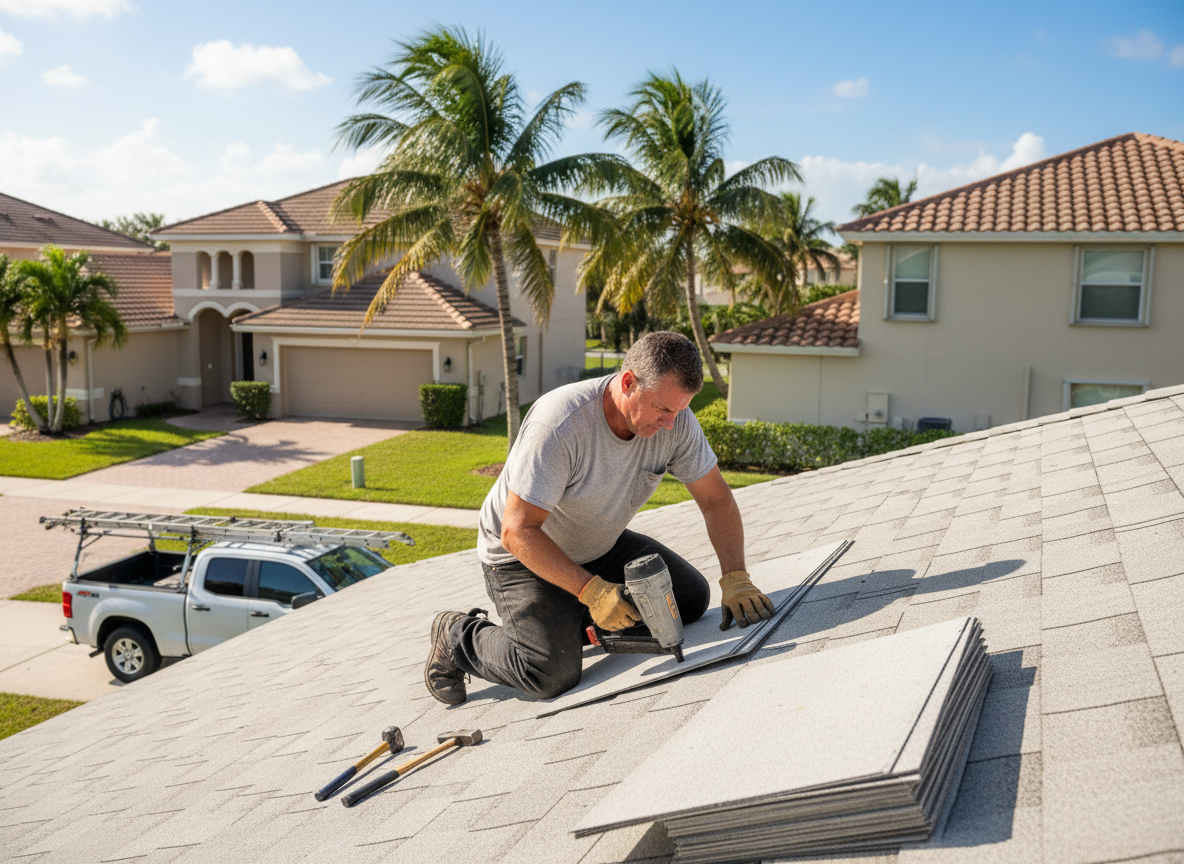
Coconut Creek sits in Broward County with a mix of 1970s-1990s single-family homes and newer townhomes near the Promenade. These roofs see daily sun, sudden downpours, and occasional tropical storms that drive water under flashing and lift older shingles. Affordable roofing here focuses on impact-rated asphalt shingles or basic metal panels that meet current Florida wind-load rules without premium pricing. Crews check decking for rot from prior leaks, replace only what's needed, and use peel-and-stick underlayment in valleys to cut future callbacks.
Homeowners often try to stretch a roof one more season after noticing granule loss in gutters along Sample Road or Lyons Road. That shortcut usually ends with deck damage once summer rains hit. Proper affordable work starts with a full inspection of soffits, vents, and penetrations around HVAC units common on local ranch homes. Materials are chosen for 130 mph wind ratings where code requires it, and installation includes drip edge on every eave to handle the heavy runoff from flat lots and retention ponds.
Terrain in the area is mostly flat with sandy soil that holds moisture after storms, so crews watch for hidden leaks around skylights and chimneys during tear-offs. Affordable jobs still require proper ventilation to prevent heat buildup in attics, especially in homes built before ridge vents became standard. Skipping this step leads to premature failure even on lower-cost installs. Work stays focused on visible results homeowners can inspect from the ground once complete.
Technician insight
In Coconut Creek, the thing that catches most people out with Affordable Roofing is skipping proper underlayment in the valleys and around the many plumbing vents on 1980s homes. The flat lots and sudden afternoon storms push water sideways under cheap installs faster than owners expect, turning a low-cost job into deck repairs within two seasons.
Shingle Replacement After Storm Damage
A 1987 ranch near Coconut Creek Park showed widespread granule loss and soft spots along the rear valley. Inspection found rotted decking from repeated leaks. We replaced only the damaged sections, added peel-and-stick underlayment, and installed new impact shingles. The roof now handles heavy rain without interior drips.
How it works
- 1
Site Assessment
Walk the roof and attic to note existing material, deck condition, and ventilation in Coconut Creek homes.
- 2
Material Selection
Review impact-rated shingles or metal options that fit the budget and meet local wind requirements.
- 3
Prep and Tear-Off
Remove old layers, replace damaged decking, and install underlayment and drip edge.
- 4
Installation and Cleanup
Apply new roofing, seal all penetrations, and haul away debris before final walkthrough.
Pricing
Upfront quotes based on square footage, pitch, and chosen material; no hidden add-ons after start.