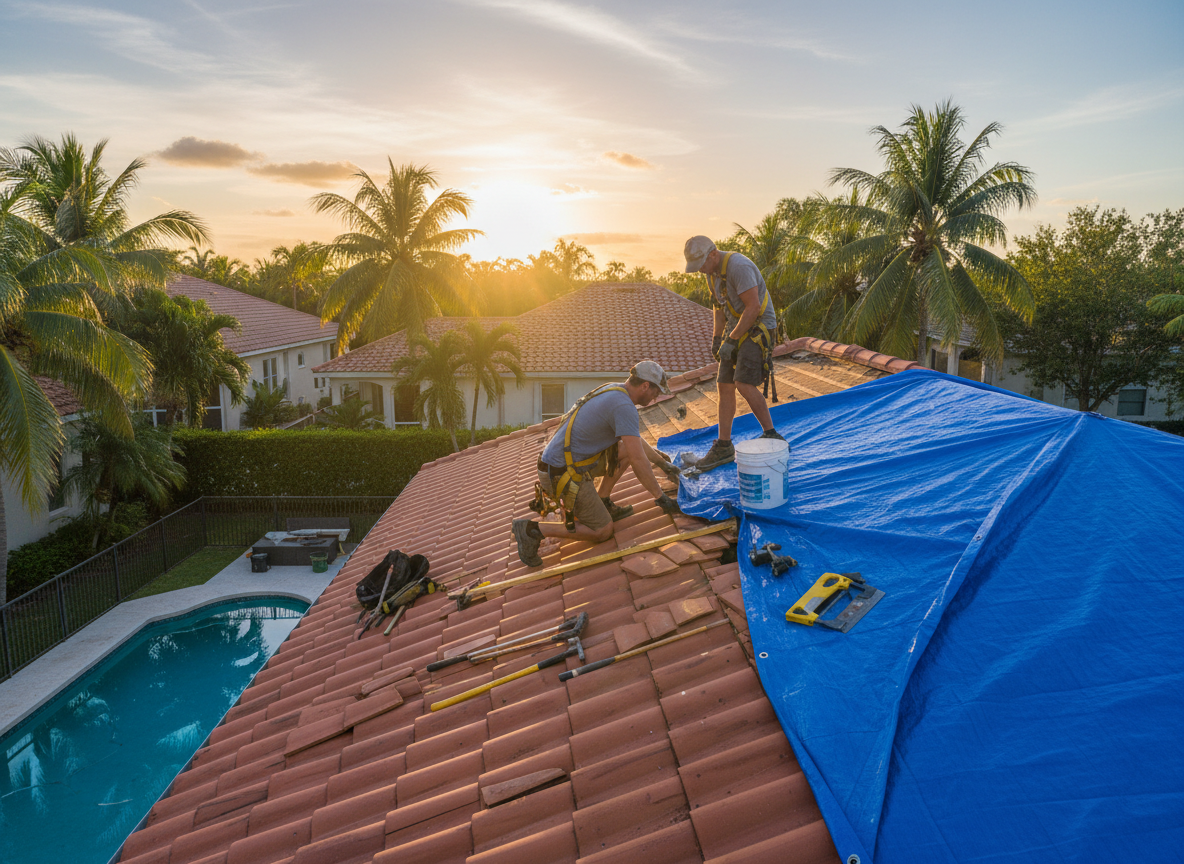
Coconut Creek homes built in the 1970s through 1990s often feature asphalt shingle roofs that suffer from granule loss and cracking after years of intense afternoon thunderstorms and occasional tropical storms. High humidity accelerates underlayment deterioration, allowing water to reach the decking even when surface shingles appear intact. Repairs must address both visible damage and hidden moisture that spreads along seams and valleys.
Florida Building Code wind-load requirements in Broward County mean any roof repair involving more than 25 percent of the surface often triggers updates to fastening patterns and flashing details. Technicians routinely check for corroded drip edges and improperly sealed penetrations around vents and skylights that fail during heavy downpours. Matching existing shingle profiles prevents future leaks at transition points where newer materials meet older sections.
Edge cases include tile roofs on some newer developments near the Turnpike where cracked barrel tiles allow wind-driven rain under the roof deck. Quick identification of active leaks versus staining from prior events prevents unnecessary full replacements. Homeowners should avoid temporary tarps that trap moisture and promote mold growth in the attic spaces typical of ranch-style homes throughout the area.
Technician insight
In Coconut Creek, the thing that catches most people out with Roof Repair is how quickly afternoon thunderstorms drive water under lifted shingles on 1980s homes with original felt underlayment, turning a small ridge leak into widespread deck rot before any ceiling stain appears.
Thunderstorm Leak on Sample Road
Homeowner reported ceiling stains after repeated heavy rains. Inspection revealed lifted shingles and deteriorated felt along a valley on a 1987 ranch home. Crew replaced the affected section, installed new synthetic underlayment, and resealed the valley. No further intrusion occurred during the next storm season.
How it works
- 1
Initial Assessment
On-site inspection of roof surface, flashing, and attic for active leaks and hidden damage.
- 2
Scope Definition
Identification of affected sections, material matching, and code compliance needs for the repair area.
- 3
Targeted Repair
Replacement of damaged shingles or tiles, resealing of penetrations, and restoration of underlayment where needed.
- 4
Final Verification
Water testing and attic inspection to confirm the repair holds under local rain conditions.
Pricing
Upfront quotes provided after inspection; costs vary by extent of hidden damage and material type.