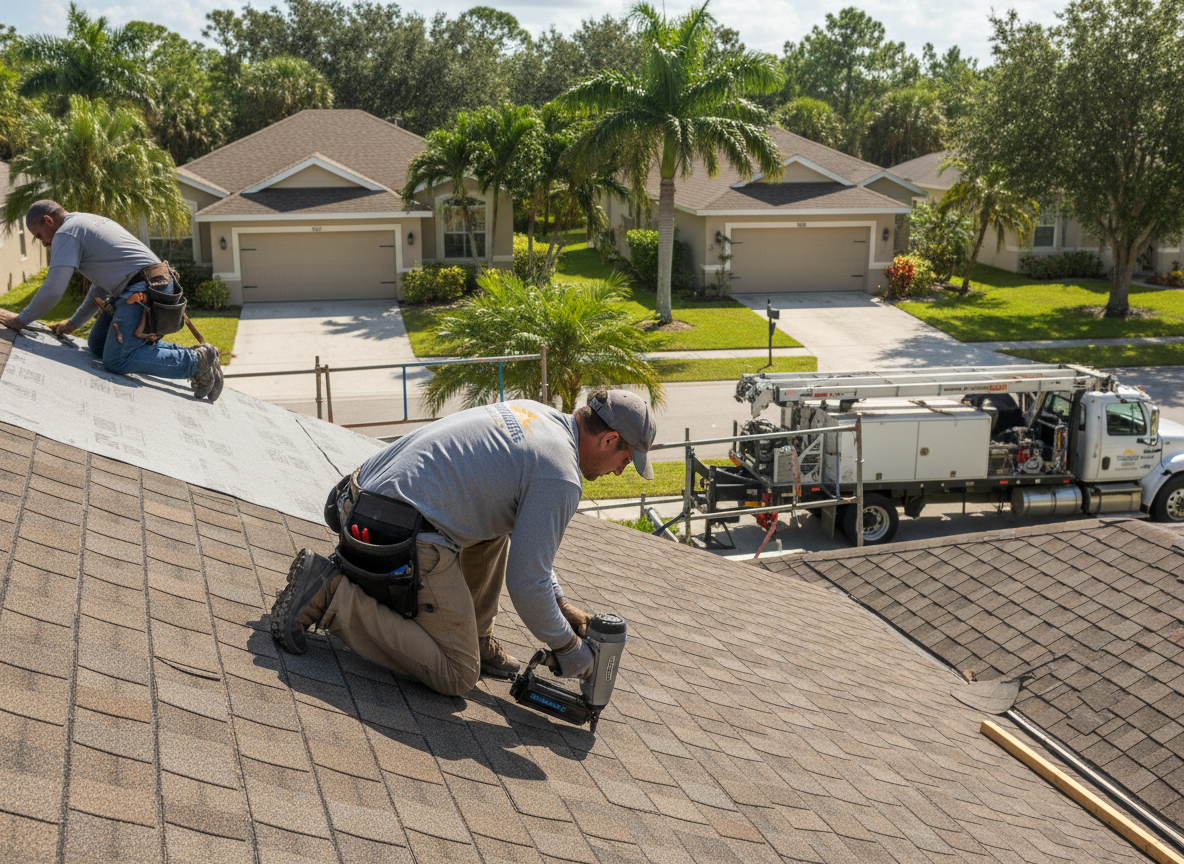
Coconut Creek homes built from the 1970s through the 1990s often carry original tile or asphalt roofs that have reached the end of their service life under constant UV, salt air and summer downpours. Proper installation starts with a complete tear-off to inspect decking, followed by new self-adhered underlayment rated for high-wind zones. Edge cases include low-slope sections around pool cages and skylights where water ponds during afternoon thunderstorms, requiring extra step flashing and drip-edge detailing that meets current Florida Building Code wind-load requirements.
Metal roof systems are increasingly chosen for their heat reflection and 140-mph wind ratings, yet they demand precise thermal expansion joints and sealed ridge vents to prevent condensation in the humid climate. Tile roofs remain common in neighborhoods near the Promenade and along Sample Road, but each course must be fastened with hurricane clips rather than mortar alone so the assembly survives gusts that accompany tropical storms. Ventilation upgrades during installation also reduce attic heat buildup that accelerates shingle aging in this region.
Homeowners frequently overlook the need to coordinate roof work with soffit and fascia replacement on older properties where wood has begun to rot from repeated moisture exposure. We sequence these trades so new drip edge and gutter brackets sit on sound substrate. Final walkthrough includes checking every penetration and valley for positive drainage before leaving the site.
Technician insight
In Coconut Creek, the thing that catches most people out with Roof Installation is how flat lots and frequent heavy summer rains turn any missed flashing detail into an attic leak within weeks—especially on 1980s homes where original plywood decking has already softened around the skylights.
Tile Roof Replacement on a 1980s Home
Homeowner reported water stains in the master closet after several rainy seasons. We found deteriorated felt under the original barrel tile and soft spots around two skylights. The crew installed new self-adhered underlayment, hurricane clips on every tile, and added ridge ventilation before resetting the roof. No further leaks appeared during the next wet season.
How it works
- 1
Site Assessment
Measure the roof, note deck condition, existing ventilation and any low-slope areas common on Coconut Creek homes.
- 2
Material Selection
Choose impact-rated tile, architectural shingles or metal panels matched to the home's wind-exposure category and HOA guidelines.
- 3
Tear-Off and Prep
Remove old roofing, inspect and replace damaged decking, install new underlayment and flashing at all valleys and penetrations.
- 4
Installation and Detailing
Lay new roof with required hurricane clips, sealed ridge vents and proper overlap for local rainfall intensity.
- 5
Final Inspection
Walk the roof and attic with the homeowner, confirm drainage and document the completed work.
Pricing
Cost depends on roof size, chosen material and any deck repairs discovered during tear-off; we provide an upfront written quote after the site visit.