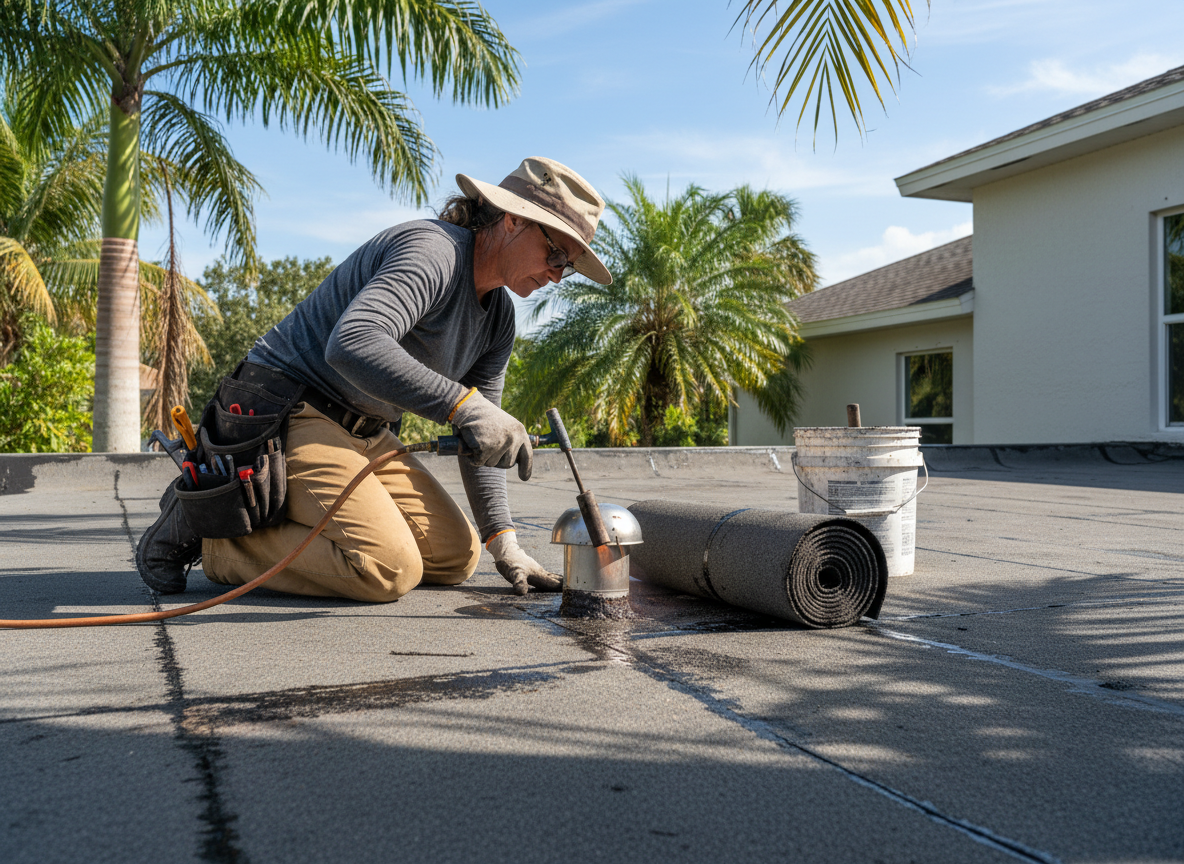
Coconut Creek properties often feature flat or low-slope roofs on commercial buildings and some townhomes built from the 1970s onward. These surfaces collect ponding water after summer thunderstorms because the terrain is flat and drainage slopes are frequently inadequate. Over time the standing water breaks down modified bitumen and EPDM seams, allowing leaks into the structure below. Quilvex Vault Group starts every repair by tracing the actual water path rather than patching visible damage, which prevents repeat failures during the next wet season.
Hurricane season brings high winds that lift edges and tear flashings around HVAC curbs and skylights common on Coconut Creek roofs. Heat and UV from intense Florida sun also dry out coatings and create alligatoring in older asphalt surfaces. Repair crews must match existing membrane types exactly and restore proper slope at drains to meet current Broward County wind-load expectations. Skipping these steps leads to insurance denials after the next storm.
Work on occupied buildings requires protecting interior finishes and coordinating around business hours. At the 5379 Lyons Rd base, crews keep materials staged for same-day response when active leaks are reported. Every repair includes new termination bars, sealed penetrations, and a final flood test to confirm water sheds correctly before crews leave the site.
Technician insight
In Coconut Creek the thing that catches most people out with Flat Roof Repair is ponding water that sits for days after a storm because the ground is so flat and many 1980s roofs never had enough slope built in. Homeowners see a small stain inside and think a patch will fix it, but the real issue is usually at the drains or where insulation has already soaked through.
Ponding Leak on Commercial Building
A retail strip in Coconut Creek reported ceiling stains after repeated summer rains. Inspection found water trapped behind a clogged scupper and under the membrane. Crews removed the wet section, restored slope at the drain, and installed new compatible membrane with sealed edges. The interior stayed dry through the next heavy storm cycle.
How it works
- 1
Inspection and Moisture Mapping
Technicians walk the entire roof surface and use moisture meters to locate wet insulation without guessing.
- 2
Drainage Assessment
Existing scuppers and drains are checked for blockages and slope is measured to identify ponding zones.
- 3
Membrane and Flashing Repair
Damaged sections are cut out and replaced with compatible material; all edges and penetrations receive new flashing.
- 4
Final Flood Test and Documentation
The repaired area is flooded and observed for leaks before photos and notes are recorded for the property owner.
Pricing
Upfront quotes issued after on-site inspection; price varies with roof size, membrane type, and extent of wet insulation.