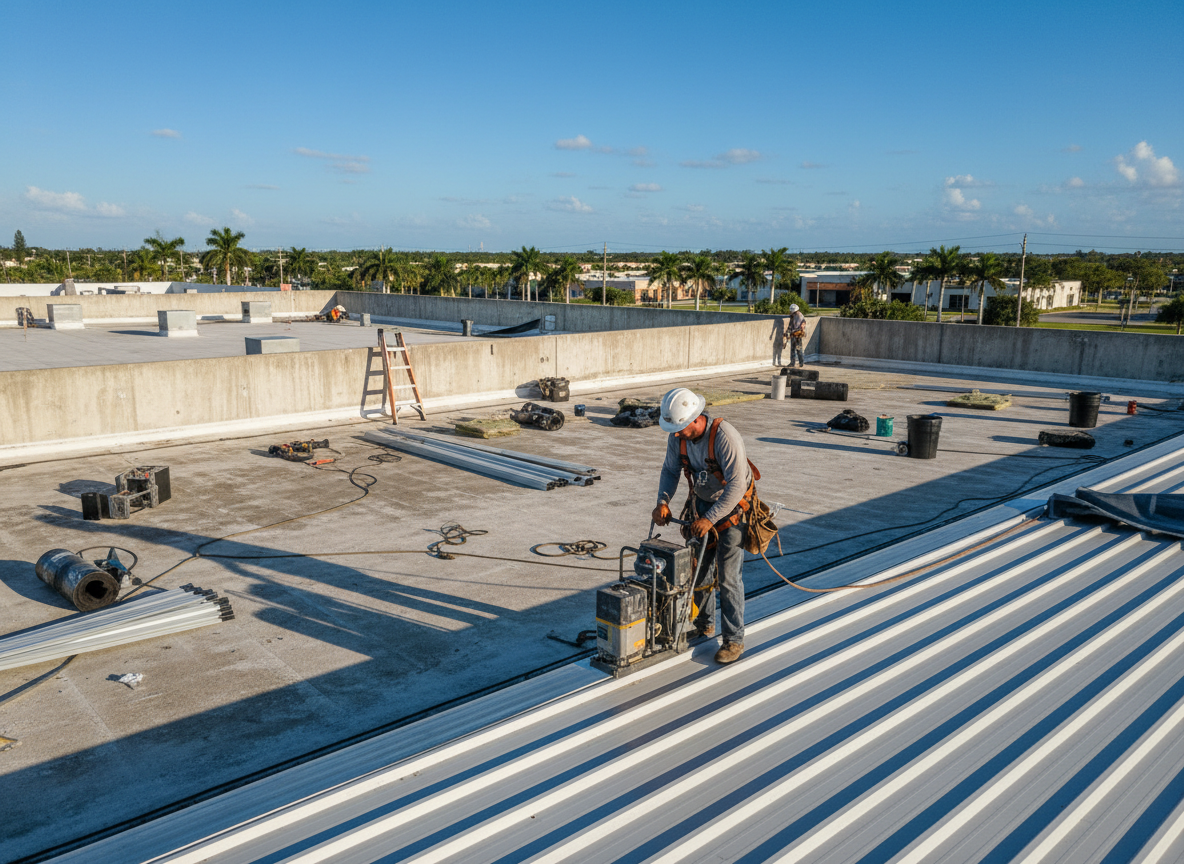
Industrial roofing in Coconut Creek demands materials that withstand repeated heavy downpours, high winds during hurricane season, and constant UV exposure common to Broward County. TPO and EPDM membranes are frequently chosen for flat roofs on warehouses and manufacturing facilities because they handle ponding water better than older built-up systems when proper slopes and drains are maintained. Edge cases such as multiple HVAC penetrations and skylight arrays require reinforced flashing details to prevent leaks that quickly spread across large roof surfaces.
Broward County building codes require specific wind uplift ratings that affect fastener patterns and perimeter securement on industrial structures, especially those near the Florida Turnpike corridor where open terrain increases wind loads. Older industrial stock in areas off Lyons Road often features aging metal decking that must be evaluated for corrosion before any overlay work. Drainage modifications become critical when original scuppers and internal drains clog with debris from surrounding landscaping and seasonal storms.
Installation crews must coordinate around active operations at these sites, using staged access plans to avoid disrupting shipping and production schedules. Proper insulation upgrades during re-roofing can reduce cooling loads in buildings that run equipment around the clock. Regular inspections after major rain events help catch seam failures early before water migrates into stored inventory below.
Technician insight
In Coconut Creek, the thing that catches most people out with Industrial Roofing is how afternoon thunderstorms dump water faster than aging internal drains on flat-roof warehouses near Lyons Road can handle, leading to hidden ponding that only shows up after the membrane fails.
Recurring Leaks at Coconut Creek Warehouse
Water was entering around HVAC curbs after repeated heavy rains. Inspection revealed deteriorated flashing and clogged scuppers on the flat roof. We replaced the membrane section with reinforced TPO, added tapered insulation for better drainage, and cleared all outlets. The facility has remained dry through multiple storm events since completion.
How it works
- 1
Initial Roof Assessment
Technicians examine membrane condition, drainage paths, and structural decking on the specific Coconut Creek industrial building to identify existing issues.
- 2
Material and System Selection
We match TPO, EPDM, or metal panel systems to the building's wind exposure, roof slope, and existing penetrations while meeting local code requirements.
- 3
Installation and Detailing
Crews install the chosen system with reinforced flashings around HVAC units and skylights, ensuring proper seams and drainage modifications.
- 4
Final Inspection and Handover
A walkthrough confirms water-tight performance and provides the owner with maintenance guidance tailored to the property's conditions.
Pricing
Upfront quotes based on roof size, chosen membrane type, and site access conditions.