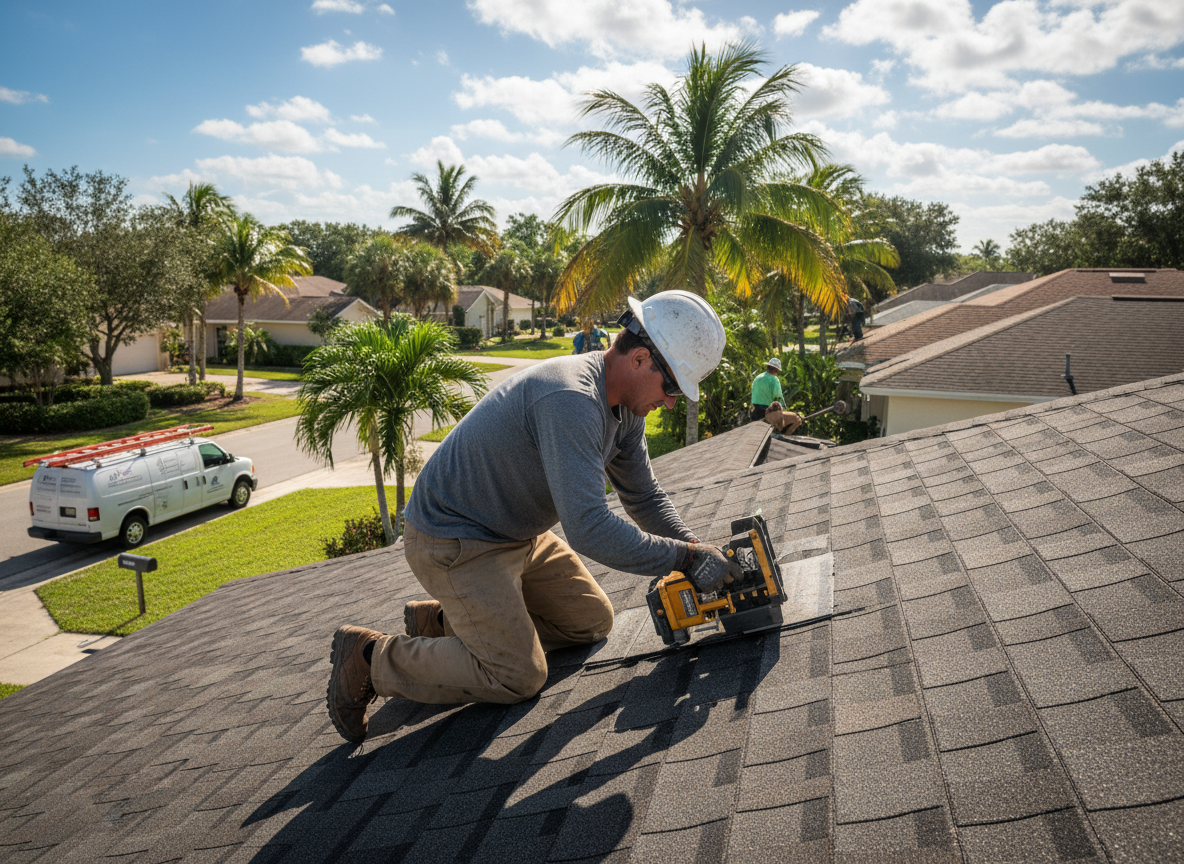
Coconut Creek homes often feature concrete tile or asphalt shingle roofs installed decades ago when building codes allowed lighter fastening methods. Heavy seasonal rains and high winds during summer storms expose weak underlayment and corroded flashing around chimneys and vents. Proper replacement requires removing old layers completely rather than overlaying, then installing new underlayment rated for 110 mph wind zones common in Broward County. Skipping this step leads to leaks within two seasons when water finds its way under lifted tiles during afternoon downpours.
Edge cases appear regularly with flat or low-slope sections on ranch-style homes near the Turnpike corridor. These areas collect standing water after heavy rain because original drainage slopes have settled over time. We address them by adding tapered insulation and new membrane systems that tie into the main pitched roof without creating cold joints. Homeowners who attempt DIY sealant fixes usually trap moisture inside the deck, accelerating rot in the plywood sheathing that only shows up after the next hurricane season.
Florida product approval numbers must match the specific wind-load requirements for each Coconut Creek zip code. Using unapproved shingles or tiles voids insurance coverage even if the roof looks fine from the street. We verify every bundle against current Miami-Dade notices before installation and document the approvals for the homeowner's records. This paperwork step prevents claim denials later when storms hit the area.
Technician insight
In Coconut Creek, the thing that catches most people out with Professional Roofing Services is how quickly the frequent summer thunderstorms find old sealant around skylights on 1980s homes. The original flashing was never designed for today's wind-driven rain, and once water gets behind the tile it travels along the deck for weeks before showing up inside. Checking the attic before any work starts prevents surprises that change the entire scope.
Storm-Damaged Tile Roof Near Lyons Road
A Coconut Creek homeowner noticed water stains after several heavy rains. We found lifted tiles and deteriorated underlayment along the south-facing slope. We removed the damaged section, replaced the underlayment, and reinstalled matching tiles with upgraded fasteners. The leaks stopped and the roof now handles afternoon storms without further issues.
How it works
- 1
Initial Assessment
We arrive at the Coconut Creek address and walk the entire roof, checking attic spaces for moisture stains and measuring existing ventilation.
- 2
Detailed Report
Photos and notes document every damaged section, including underlayment condition and flashing details, then we review findings on site.
- 3
Material Selection
We match products to the home's age and roof pitch, confirming wind ratings required for the specific neighborhood.
- 4
Installation and Final Walk
Work proceeds with daily debris removal, followed by a final inspection where the homeowner checks every repaired area.
Pricing
Upfront quotes provided after on-site inspection; final price depends on roof size, layers, and access.