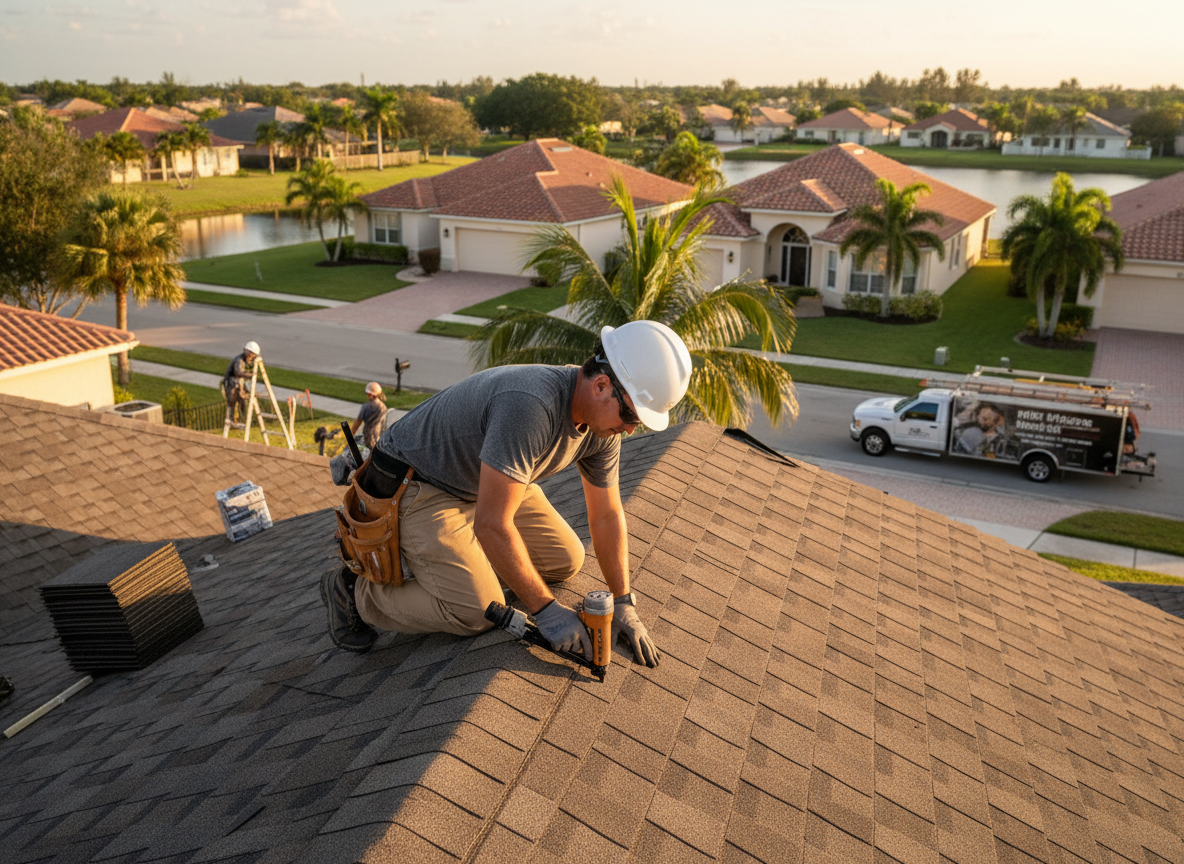
Coconut Creek sits in Broward County with many single-family homes built between the 1970s and 1990s that feature asphalt shingles or concrete tile roofs. These roofs face repeated exposure to intense UV, afternoon thunderstorms, and hurricane-season winds that drive water under flashing and lift shingles. Homeowners often see granule loss on south-facing slopes and algae streaks along valleys where humidity stays high year-round. Proper underlayment and wind-rated fasteners become essential because older decking can soften from trapped moisture after repeated downpours.
Broward County building codes require impact-rated materials in Coconut Creek to meet high-velocity hurricane zone standards. When replacing a roof on a 1980s ranch near the Turnpike, crews must verify rafter spacing and add hurricane clips if the original framing lacks them. Tile roofs common in neighborhoods like Winston Park demand careful underlayment choices because broken tiles allow wind-driven rain to reach the felt quickly. Skipping these steps leads to callbacks after the first summer storm.
Roofing contractors working Coconut Creek streets also deal with tree canopy from mature oaks that drop debris into gutters and create shaded areas where moss grows. This organic buildup holds water against the surface and accelerates shingle curling on east exposures. Checking attic ventilation during every service call prevents heat buildup that shortens roof life in the area's long summers. These details separate quick patch jobs from work that lasts through the next wet season.
Technician insight
In Coconut Creek, the thing that catches most people out with Roofing Contractors In My Area is skipping the attic inspection on 1980s homes near Lyons Road. You find rotted decking from years of small leaks that never showed inside until the next big rain, and then the job changes from a simple overlay to a full tear-off.
Storm Leak on Shingle Roof
After a June thunderstorm, water appeared along the ceiling in a Coconut Creek home near the Promenade. Inspection showed lifted shingles and failed step flashing on the west slope. The crew removed the damaged section, replaced the underlayment with self-adhering membrane, and reinstalled impact shingles with new flashing. No further leaks occurred during the remaining wet season.
How it works
- 1
Initial Site Assessment
Walk the roof and attic in Coconut Creek to note age of materials, existing ventilation, and signs of prior storm damage.
- 2
Scope and Material Selection
Review Broward County wind-load requirements and recommend impact-rated shingles or tiles suited to the home's pitch and exposure.
- 3
Deck and Flashing Work
Replace damaged decking, install new drip edge, and seal all penetrations before underlayment goes down.
- 4
Final Inspection and Cleanup
Walk the job with the homeowner, verify ridge vent function, and remove all debris from the yard and driveway.
Pricing
Upfront written quotes provided after inspection; final price depends on roof size, pitch, and any deck repairs found on site.